
Plumbing issues often start as minor annoyances. You might hear a faint drip in the kitchen. Your bathroom sink drains a little slower than usual. While these seem small, they can quickly turn into expensive disasters. Ignoring a tiny leak today can lead to a flooded basement tomorrow.
Most homeowners feel intimidated by pipes and valves. However, you do not need a professional license for every task. Many common issues have very simple solutions. Learning these essential plumbing repairs you should know can prevent costly water damage. In fact, proactive homeowners can save money. Detecting problems early is the best way to keep your hard-earned money in your pocket.
1. Fixing a Leaky Faucet
A dripping faucet is more than just an annoying sound. It is a constant drain on your household budget. Statistics show that a faucet dripping once per second wastes 3,000 gallons of water per year. That is enough water to take over 180 showers!
Most leaks happen because of a worn-out washer or O-ring. These rubber parts dry out and crack over time. You can find replacement kits at any local hardware store for $5 to $15. Fixing this yourself can save you over $100 on your annual water bill. Shut off the water, disassemble the handle, and replace the old seal. It is a quick fix with a huge financial return.
2. Unclogging Slow Drains Naturally
Slow drains are usually caused by hair, grease, and soap scum. Many people reach for harsh chemical cleaners immediately. However, these chemicals can actually damage your pipes over time. A safer, cheaper option is to use pantry items.
A mixture of baking soda and vinegar, followed by hot water, works wonders. If the clog is stubborn, buy a plastic drain snake for about $10. A professional plumber visit for a simple clog can cost between $120 and $250. Understanding essential plumbing repairs you should know allows you to clear drains for nearly nothing. You save money while protecting your plumbing system from corrosive chemicals.
3. Repairing a Running Toilet
A running toilet is one of the biggest water thieves in a home. It can waste up to 200 gallons of water every single day. This happens when the flapper valve inside the tank fails to seal properly. If you hear your toilet “hissing” constantly, it is time for a repair.
You can fix this by replacing the flapper or adjusting the float. A new flapper valve costs between $8 and $20 at the store. The installation takes less than ten minutes and requires no special tools. By stopping the constant flow, you could save up to $200 yearly on water bills. It is the most cost-effective DIY project in any home.
4. Stopping Pipe Leaks Under the Sink
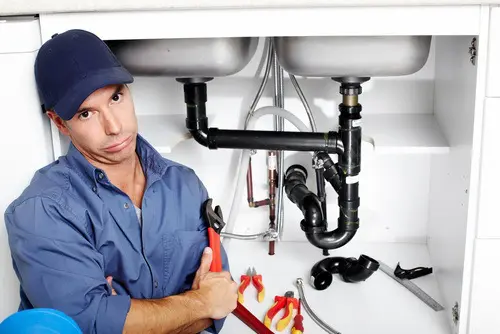
Have you noticed a damp spot or a musty smell under your sink? A loose pipe connection or a worn washer often causes this. Over time, the vibrations of daily use can loosen these joints. If left alone, the water will rot your cabinetry and cause mold to grow.
Before calling a pro, try tightening the pipe joints with a wrench. You can also apply plumber’s tape or pipe sealant to the threads for a better seal. The materials for this fix cost between $5 and $20. Compare that to a professional repair bill of $150 to $400. Keeping your under-sink area dry is a simple way to avoid major renovation costs.
5. Fixing Low Water Pressure
If your shower or sink feels weak, you likely have low water pressure. This is rarely a problem with the main water line. Instead, it is usually caused by mineral deposits in the faucet aerator. Over time, calcium builds up and blocks the tiny holes where water flows.
The fix is almost entirely free. Unscrew the aerator from the end of the faucet. Soak it in a bowl of white vinegar for about 30 minutes. This dissolves the minerals and restores full flow immediately. It takes very little effort but makes your plumbing feel brand new again.
6. Replacing a Showerhead for Better Efficiency
Older showerheads are often inefficient and waste significant water. If your showerhead is more than ten years old, you are likely overpaying. Upgrading to a modern low-flow model is a very simple DIY task.
- Step 1: Unscrew the old showerhead using a wrench.
- Step 2: Clean the pipe threads.
- Step 3: Wrap new plumber’s tape around the threads.
- Step 4: Screw on the new low-flow showerhead.
A quality replacement costs between $20 and $40. This simple upgrade can save your household up to 2,700 gallons of water every year.
7. Preventing Garbage Disposal Problems
Garbage disposals are sturdy but not invincible. Most problems come from food waste blockages or jammed blades. Grease buildup is another common culprit that causes foul odors. Fortunately, most disposal issues can be solved with a single button.
If the disposal stops working, look for the red reset button on the bottom of the unit. Pressing this often solves the problem instantly. To clean the blades and break up grease, drop in some ice cubes and coarse salt. Run the disposal with cold water to sharpen the blades and clear out debris. This prevents expensive mechanical failures.
8. Prevent Frozen Pipes in Winter
In colder climates, frozen pipes are a major risk for homeowners. When water freezes inside a pipe, it expands and can cause the metal or plastic to burst. A burst pipe can cause over $1,000 in water damage within minutes. Prevention is much cheaper than the cure.
Always insulate exposed pipes in unheated areas, such as crawl spaces or garages. During extreme cold snaps, let your faucets drip slightly to keep water moving. Keeping your cabinet doors open also allows warm air to reach the pipes. These small steps protect your home from devastating winter plumbing emergencies.
9. When to Call a Professional Plumber
DIY fixes are fantastic for saving money and building confidence. However, some plumbing jobs require the expertise of a licensed professional. Attempting to fix complex issues yourself can sometimes lead to more damage. You should call an expert for the following:
- Major pipe leaks: If a pipe bursts or has a large crack, shut off the main water and call a pro.
- Sewer line issues: If multiple drains are backing up, the problem is likely deep in your sewer line.
- Water heater problems: Dealing with gas lines or high-voltage electricity is dangerous for amateurs.
- Discolored water: If your water looks rusty or brown, you may have a failing main line.
Conclusion
Taking care of your home does not have to be expensive. By handling these simple plumbing fixes, you can protect your property and your wallet. Most of these tasks require only basic tools and a little bit of time. Consistency is the key to avoiding major repairs. Always stay observant and address small drips before they become floods. Your home will stay in great shape, and you will enjoy the peace of mind that comes with a job well done.