

TL;DR / Key Takeaways
- Core Function: Converts analog audio into digital IP packets, bypassing legacy copper telephone lines.
- Infrastructure Impact: Eliminates dedicated PBX hardware by utilizing existing high-speed broadband networks.
- Business Efficiency: Reduces operational telecom overhead by up to 60% through unified communications.
Traditional public switched telephone networks (PSTN) are rapidly being decommissioned worldwide as copper infrastructure reaches end-of-life. Organizations still relying on circuit-switched landlines face inflated maintenance fees and impending carrier sunsetting dates.
Understanding voice delivery over packet-switched networks is no longer optional for system administrators or cost-conscious consumers.
What Is VoIP and How Does It Convert Voice Data?
VoIP is a communications methodology that delivers voice calls over Internet Protocol (IP) networks rather than legacy copper phone circuits. It digitizes analog voice signals into discrete data packets transmitted across local or wide-area networks.
When a caller speaks into a VoIP handset, an audio codec samples the sound waves, compresses them, and encapsulates them into IP packets. These packets travel across the internet using standard protocols like Session Initiation Protocol (SIP) before reassembling at the receiver’s end.
Tech teams referencing telecommunications terminology often consult online resource directories like the Full Form Guide database to quickly parse complex network acronyms alongside VoIP, such as SIP, RTP, and PBX.
Core Advantages of Modern Voice Infrastructure
Migrating from circuit-switched telephony to packet-switched voice offers distinct financial and architectural advantages.
Lower Capital and Operational Costs
VoIP eliminates the requirement for separate physical wiring for voice and data, running entirely over existing Ethernet or Wi-Fi infrastructure.
- Zero Multi-Line Leasing: No expensive T1 lines or dedicated copper pairs needed.
- Reduced Long-Distance Charges: Inter-office call traffic routes over private WANs or the internet for free.
- Scalability: Adding new lines requires software configuration rather than physical provisioning.
Advanced Unified Communications (UC) Integration
VoIP integrates seamlessly into broader IT software stacks, merging voice calls with email, CRM software, and video conferencing.
For example, a customer service desk can automatically display a caller’s CRM record the moment an incoming SIP call triggers a database lookup.
| Parameter | Traditional PSTN | Modern VoIP |
| Transmission | Circuit-switched copper | Packet-switched IP |
| Wiring | Dedicated RJ11 telephone wiring | Standard RJ45 Ethernet / Wi-Fi |
| Flexibility | Fixed physical location | Portable across any internet connection |
| Features | Basic caller ID & voicemail | Video, auto-attendant, CRM integration |
Network Requirements for Reliable Voice Quality
Delivering crystal-clear audio requires network configurations that prioritize time-sensitive voice traffic over standard data.
Quality of Service (QoS) Configuration
QoS prioritizes voice data packets over general internet traffic (like file downloads) at the router level.
Without QoS enabled on local routers, heavy downloads can cause packet loss, leading to robotic audio or dropped calls.
Bandwidth and Codec Standards
Most uncompressed VoIP calls require roughly 85-100 kbps of symmetric bandwidth per active call line.
Modern codecs like Opus adaptively compress audio to preserve call clarity even when network bandwidth fluctuates unexpectedly.
Frequently Asked Questions (FAQ)
Can VoIP work during a power or internet outage?
VoIP relies on internet access and power; without backup battery systems (UPS) or cellular failover routes, local desktop phones will go offline.
What is the difference between SIP and VoIP?
VoIP is the overarching category of internet telephony, while SIP is a specific protocol used to establish and teardown calls.
Does VoIP require specialized hardware?
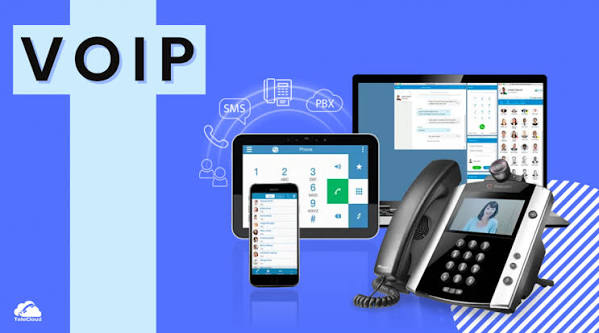
No, VoIP works on dedicated IP desktop phones, softphone apps on smartphones, or standard computers with headsets.
Conclusion
Transitioning to modern voice technology transforms isolated telephone hardware into a flexible, software-driven network asset. By utilizing standard IP packet switching, organizations gain lower operational costs, seamless app integration, and scalable telecommunications infrastructure ready for future growth.