
Storms can damage a property in several ways, from smashing windows and cracking glass doors to dislodging frames and leaving buildings exposed to the weather. Even after the worst conditions have passed, broken glazing and damaged openings can create safety risks, compromise security and allow rainwater to enter.
Acting promptly helps limit further damage and makes the property safer while permanent repairs are arranged. Professional emergency boarding up services can provide temporary protection for damaged windows and doors, helping homeowners and businesses secure their premises until the necessary restoration work can be completed.
Why Storm Damage Requires Immediate Attention
Strong winds can send loose branches, roof tiles and other debris towards windows and doors. Flying objects may shatter glass, while pressure from severe weather can worsen existing weaknesses in frames or fittings. Heavy rain can then enter through damaged openings, affecting flooring, furnishings, electrical equipment and other parts of the building.
Broken glass also presents an immediate hazard to occupants, employees, visitors and anyone entering the affected area. An unsecured opening may provide an opportunity for unauthorised access, particularly if the property will remain unattended overnight.
Not every storm-related problem requires boarding up, but exposed or unstable openings should be assessed quickly. The priority is to establish whether the area is safe, prevent avoidable damage and determine which temporary measures are appropriate.
How Emergency Boarding Up Protects Your Property
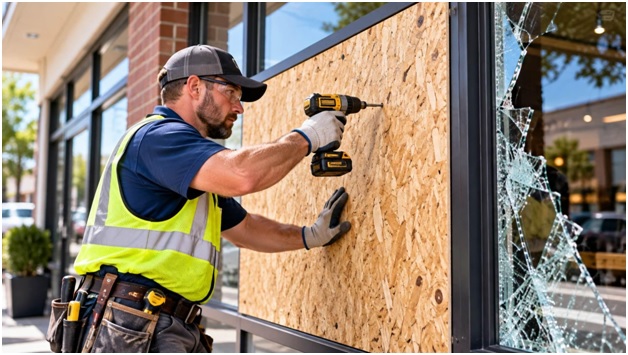
Boarding up covers damaged windows, doors or other openings with suitable materials to help prevent unauthorised access and limit exposure to the weather. The approach depends on the damage, the surrounding structure and the property’s needs.
It is particularly useful when replacement glass cannot be fitted immediately, such as when a new unit needs to be measured and ordered. Temporary boarding helps secure the property until permanent repairs can be completed, but it is not a substitute for properly installed glazing.
What to Do Immediately After a Storm
Once conditions are safe, take a measured approach to assessing the damage. Avoid rushing outside while strong winds, falling debris or flooding remain a threat. If damage has occurred inside the property, keep people away from affected areas until the risks have been assessed.
The following steps can help you manage the situation responsibly:
- Check for immediate hazards. Look for broken glass, loose frames, fallen debris and signs of water entering the building. If there are damaged electrical installations or other serious hazards, keep clear and contact the appropriate emergency professional.
- Keep people away from damaged openings. Restrict access to rooms or areas where glass has shattered or structural components appear unstable.
- Avoid handling broken glass. Small fragments can be difficult to see and may cause injuries. Leave the removal of hazardous debris to suitably equipped professionals where necessary.
- Document the damage. Take photographs from a safe distance before temporary work begins, provided it is safe to do so. These records may help support an insurance claim.
- Contact a suitable professional. Explain the type of damage, the location of the property and whether windows, doors or frames have been affected. This helps the contractor understand the situation before attending.
- Check your insurance requirements. Review your policy and contact your insurer when appropriate. Ask whether there are specific procedures for emergency repairs, approved contractors or evidence of damage.
Do not attempt to install boards from a ladder, climb onto a damaged roof or work near unstable glazing during unsafe conditions. Temporary measures should not expose you to additional risks.
Choosing the Right Boarding Up Solution
The most appropriate solution depends on the damage rather than simply the size of the opening. A professional will need to consider the condition of the glass, frame and surrounding wall before deciding how to make the area safe.
Suitable Materials and Installation
Timber boarding is commonly used to cover damaged windows and doors. The materials and fixings should suit the opening and the condition of the surrounding structure. If the frame is damaged, an alternative support may be needed.
For cracked glass that remains in place, a glazier may recommend safety film where appropriate. However, this does not restore the glass to its original strength. Always ask the contractor to explain the temporary solution, its limitations and any further repairs required.
Maintaining Access and Safety
Boarding up should not create new hazards. Doors needed for safe entry or escape must remain appropriately accessible, and temporary arrangements should not obstruct required escape routes.
Businesses should also consider customers, staff, deliveries and any equipment located near the damaged area. If a shopfront is affected, suitable temporary access arrangements may be necessary to maintain safe operations, where possible.
For residential properties, consider how occupants will enter and leave the building, particularly if the main entrance has been damaged. A professional can advise whether a temporary door or another safe arrangement is appropriate.
Why Professional Emergency Boarding Up Services Matter
Storm damage can affect window frames, fixings and surrounding structures, making a proper assessment essential. A professional contractor can identify visible hazards, recommend suitable temporary protection and advise whether replacement glazing is needed.
When choosing a contractor, check their experience, availability, response time and quoted costs. Confirm whether debris removal and permanent repairs are included, and ask what to do if severe weather delays their arrival.
Planning the Permanent Repairs
Boarding up is a temporary measure, so arrange permanent repairs once the property is safe. Leaving boards in place for too long can restrict natural light, ventilation and access.
A qualified glazier can assess whether the damage affects only the glass or also the frames and surrounding structure. Keep photographs, invoices and contractor reports for insurance purposes, and check your policy before authorising non-urgent work.
After further bad weather, inspect the area when it is safe. If boards become loose or new damage appears, contact a professional rather than attempting risky repairs yourself.
Wrapping Up
Storm damage requires a careful response that prioritises personal safety, property security and the prevention of further deterioration. Keeping people away from broken glazing, documenting visible damage and arranging a professional assessment are important first steps. Appropriate temporary boarding can protect exposed openings while permanent repairs are planned.
When a property has sustained significant window or door damage, emergency boarding up services can help make it secure until suitable replacement glazing or other repairs are completed. Choose a contractor who explains the proposed work clearly, follow your insurer’s requirements and arrange permanent repairs promptly to restore the property’s safety and functionality.